


Introduction
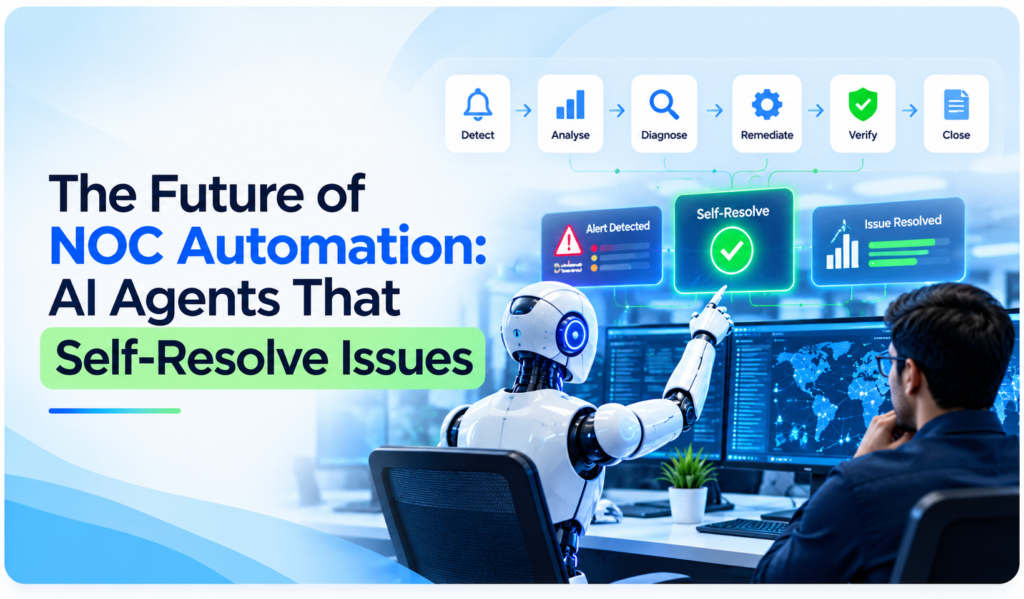
A NOC watching a thousand devices produces alerts faster than any team can read them. Detection stopped being the hard part years ago. The real work is sorting which alerts matter and clearing the repeatable ones before they reach a queue.
AI NOC automation moves the NOC from watching to acting. Agents analyse alerts, run approved fixes, and confirm the result, while engineers handle complex incidents. As Tier-1 alert volumes increase, manually reviewing every alert can quickly overwhelm MSP teams. Automation helps MSPs handle more alerts without immediately adding more staff.
What Does AI NOC Automation Actually Mean?
AI NOC automation is software that reads alerts in context and takes action within limits set by the MSP. Rule-based automation runs the same predefined script when a threshold is met. An AI agent can also look at device history, related alerts, and past resolutions before deciding what to do.
A working agent can analyze an alert, connect related events, identify the likely cause, recommend or carry out an approved fix, and check the result. AIOps event correlation helps connect thousands of signals across systems, so the NOC can focus on the issue behind the alerts instead of handling each alert separately. This takes AI automation beyond individual NOC tasks and brings these capabilities into MSP NOC workflows.
How AI Agents Self-Resolve Common NOC Issues
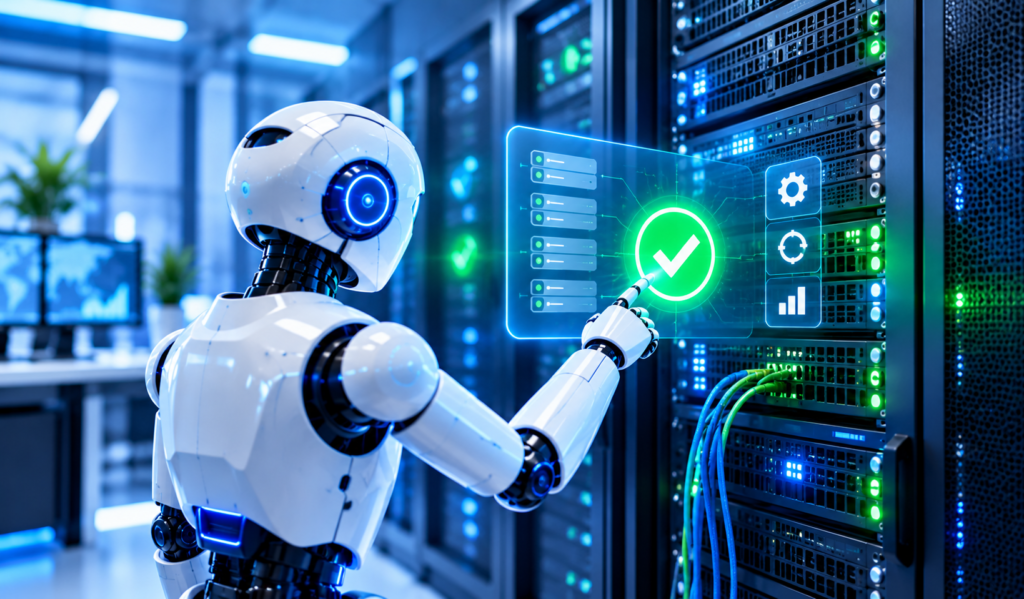
The workflow stays the same: detect, analyse, diagnose, remediate, verify, then close or escalate. The issues it clears are familiar to any NOC team.
- Failed services: restart and confirm the service holds.
- Low disk space: clear known temp and log directories to a set threshold.
- Unresponsive processes: restart and check the process returns to normal.
- Connectivity faults: run diagnostics and confirm the path is back.
- Known configuration drift: reapply an approved setting.
Autonomous incident remediation works only when the agent verifies the fix before closing, because an unverified close becomes a reopened ticket a day later. Every action stays inside policies the MSP approves in advance.
How Repeated Resolution Becomes Self-Healing
When the same fix works repeatedly, that creates a record of what works. Incident data also shows which problems keep coming back and the conditions in which they occur. These patterns can become candidates for automated runbook execution, allowing AI agents to trigger approved fixes when the same conditions appear again.
This is the difference between responding to an alert and restoring normal operation automatically. Self-healing IT infrastructure uses AI, past incident patterns, and automated runbooks to resolve known issues with minimal human intervention. Permissions and safeguards keep every action within defined limits, while verification confirms that the fix worked and normal operation has been restored. Without these checks, a bad fix could repeat at scale and create a larger incident.
Where Human Engineers Fit?
AI does not remove the need for NOC engineers. It changes where they spend their time. AI can handle repetitive monitoring, alert analysis, event correlation, approved remediation, and verification. Engineers step in when an incident falls outside the defined automation limits or needs deeper technical judgment.
The result is a NOC where automation handles predictable work while engineers focus on complex troubleshooting, high-impact incidents, exceptions, and situations that require human approval. The shift is not from humans to AI. It is a human-AI operating model where each handles the work suited to its role.
AI + 24/7 NOC Engineers: The Human-AI Model
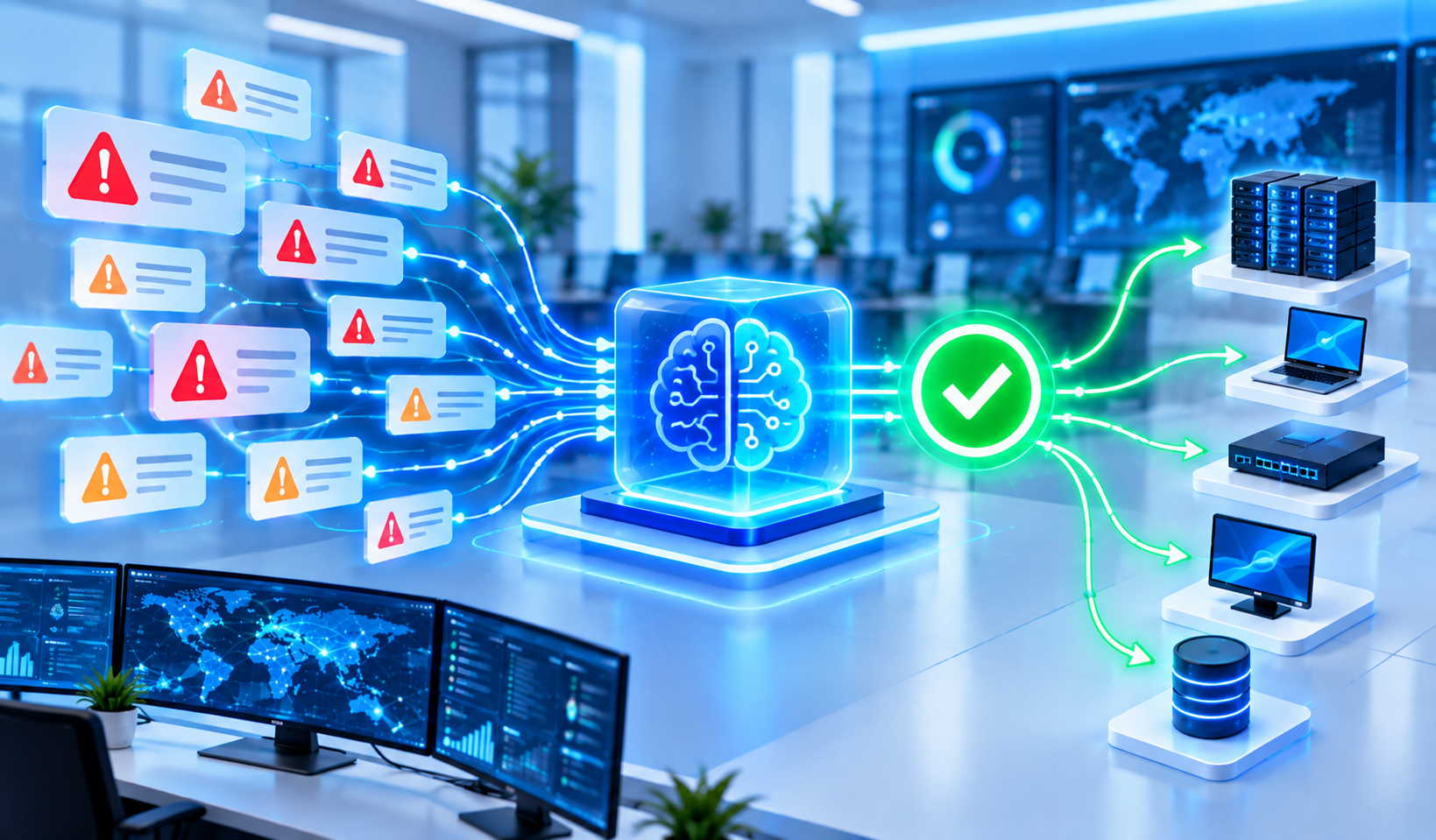
The sequence of a shift changes more than the headcount does.
Traditional NOC | AI-Assisted NOC |
Alert generated | Alert analysed in context |
Technician reviews the alert | AI correlates related events |
Technician diagnoses the issue | AI identifies the likely cause |
Manual troubleshooting | Approved remediation runs automatically |
Technician confirms resolution | AI verifies the outcome |
Technician escalates unresolved issues | AI escalates on defined conditions |
AI takes the repetitive and predictable work, while dedicated engineers handle complex incidents and stay accountable for the call. Human oversight keeps automated action inside safe limits.
Moksh Tech's 24/7 NOC Services
Moksh Tech runs 24/7 NOC services for MSP environments, covering monitoring, alert handling, troubleshooting, incident management, and escalation. Support is white-labeled, so it reaches your clients under your brand.
Our engineers work inside the platforms you already run, including ConnectWise, Datto, and Autotask, so agents and people share one queue. They own the escalation path and the judgment calls while automation clears the repeatable work.
How Is AI-Driven NOC Automation Kept Secure?
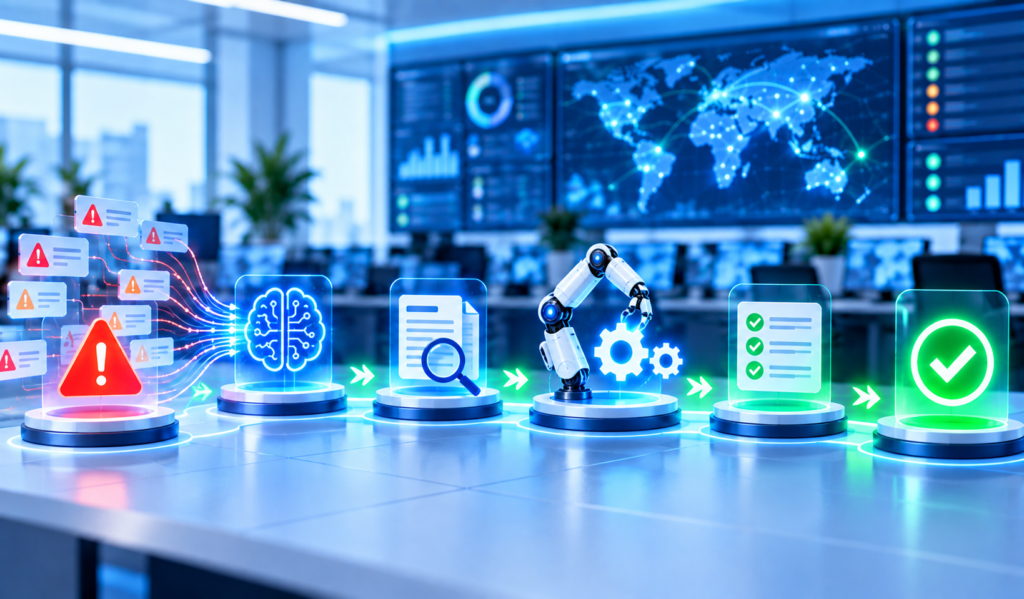
Automation that acts needs tighter controls than automation that only reports. Role-based permissions and client environment separation come first. Approved policies define what an agent may touch, audit trails record every action, and high-risk changes wait for sign-off. Poor controls are one of the clearer weak MSP partner risks.
What the Future of MSP NOC Operations Looks Like
The path runs from monitoring to correlation, then diagnosis, remediation, and prediction. More Tier-1 incidents will close without reaching a queue, and agents will work across RMM, PSA, and documentation platforms.
Conclusion
AI can take predictable, repetitive work off the NOC queue. Monitoring and human expertise still decide what good service looks like, because complex incidents need judgment and no agent supplies. AI NOC automation and NOC engineers together produce a stronger model than either alone.
Our MSP outsourcing services pair AI-driven automation with 24/7 NOC engineering support.
Book a Discovery Call with Moksh Tech.
Frequently Asked Questions
1. How do AI agents resolve Tier-1 network outages?
They correlate related alerts, compare the pattern against past incidents, and run a fix already approved for that scenario. Autonomous remediation agents verify the result before closing, and anything outside that set goes to an engineer.
2. How does machine learning cut alert noise in high-volume MSP environments?
It groups duplicates and links events sharing a root cause, so one incident replaces dozens of alerts. Alert noise reduction improves as the model learns your environment, so results build over months.
3. Does AI NOC automation work with existing RMM and PSA platforms?
Yes, through the same APIs your team already uses. RMM and PSA integration lets agents read device data, update tickets, and log resolutions in your stack.
4. When does an autonomous NOC escalate to a person?
On multi-system failures, unfamiliar patterns, and any action outside approved policy. Human-in-the-loop escalation thresholds are set before deployment, so the agent follows them rather than deciding.
5. How is client data protected in an outsourced AI-driven NOC?
Client environments stay separated, access is role-based, and every action is logged. Multi-tenant MSP security means an agent in one tenant cannot read or act in another.
Need a stronger MSP partner?
Talk to Moksh Tech about dedicated engineers, 24/7 NOC, and white-label support built exclusively for MSPs.

Bhaumik Shah is the CEO and Founder of Moksh Group and one of the MSP industry’s most forward-thinking voices. With more than 25 years of experience in managed services, he has spent his career at the intersection of technology, operations, and business growth.
Today, he leads an AI innovation firm with a singular focus: helping MSPs move beyond break-fix and reactive support to become Managed Intelligence Providers (MIPs)—businesses that leverage AI to deliver proactive, scalable, and future-ready client outcomes. His work is shaping what the next generation of managed services looks like.